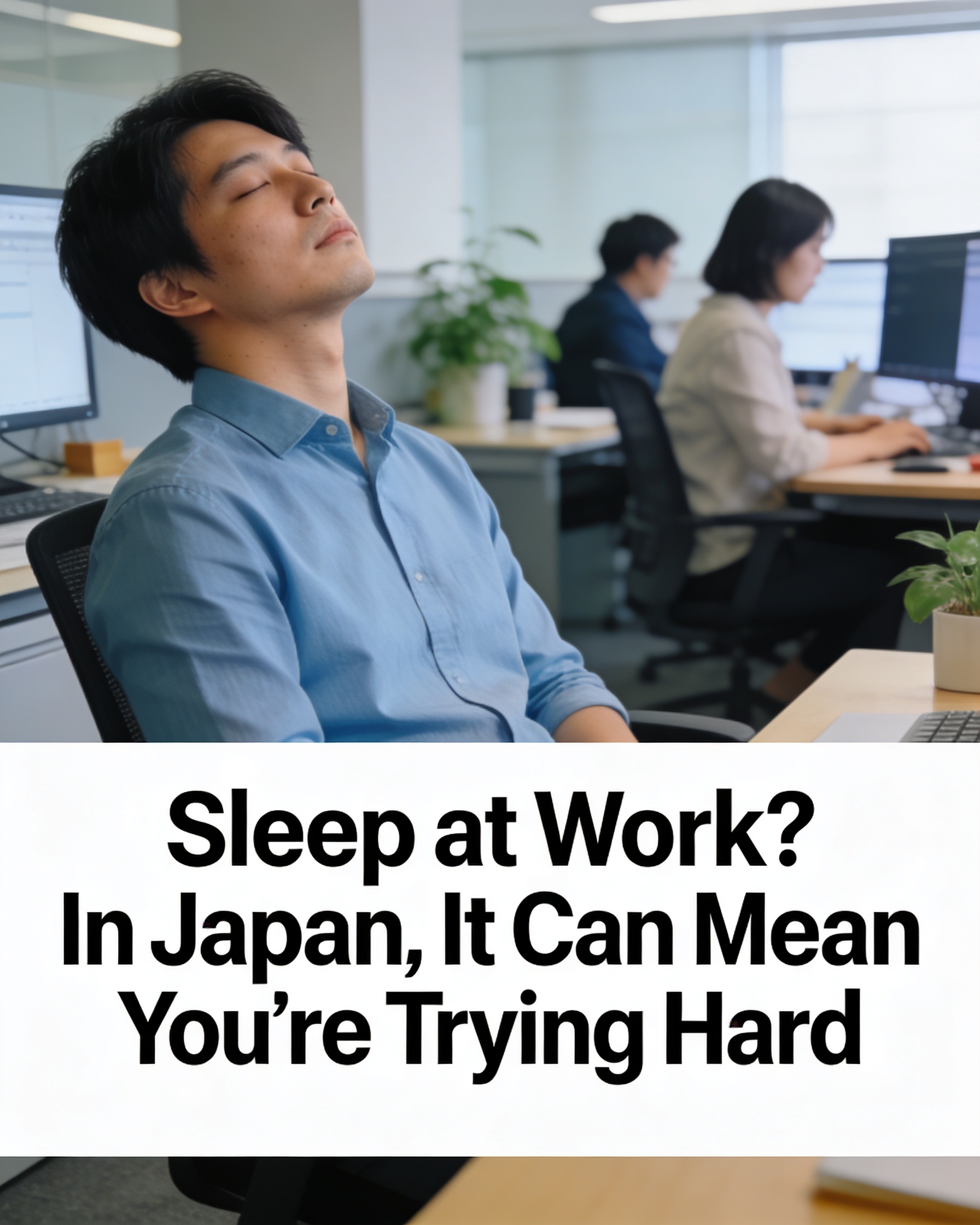
JAPAN: Sleep at work?
Sleep at work? In Japan, it can mean you’re trying hard.
In many countries, nodding off in the office is the kind of thing that gets you judged fast. It can be seen as unprofessional, disrespectful, or a sign that someone isn’t paying attention. But in Japan, the meaning of workplace sleep can be surprisingly different.
There’s a cultural concept called inemuri, which is often translated as “sleeping while present.” It refers to the idea of taking a short nap in public or at work without fully stepping out of your surroundings. The important part is that the person is still considered to be participating in the moment, even if they’ve drifted off briefly.
What makes inemuri so interesting is not just the nap itself, but the social meaning behind it. In some settings, falling asleep at work can suggest that someone has been working intensely or staying up late to meet obligations. Instead of reading it as laziness, people may read it as proof of commitment.
That’s a huge contrast to the way rest is often framed elsewhere. In a lot of work cultures, being constantly awake is treated as a badge of honor, while sleep is treated like a weakness. Japan’s approach suggests something different: that short rests can exist alongside effort, discipline, and responsibility.
Of course, this doesn’t mean everyone in Japan is encouraged to nap openly all day. Context matters, and workplace norms still vary. But the broader lesson is powerful: sleep is not just a biological need, it’s also a cultural signal.
It’s a reminder that the way we judge rest is learned. What looks like laziness in one place may look like dedication in another.