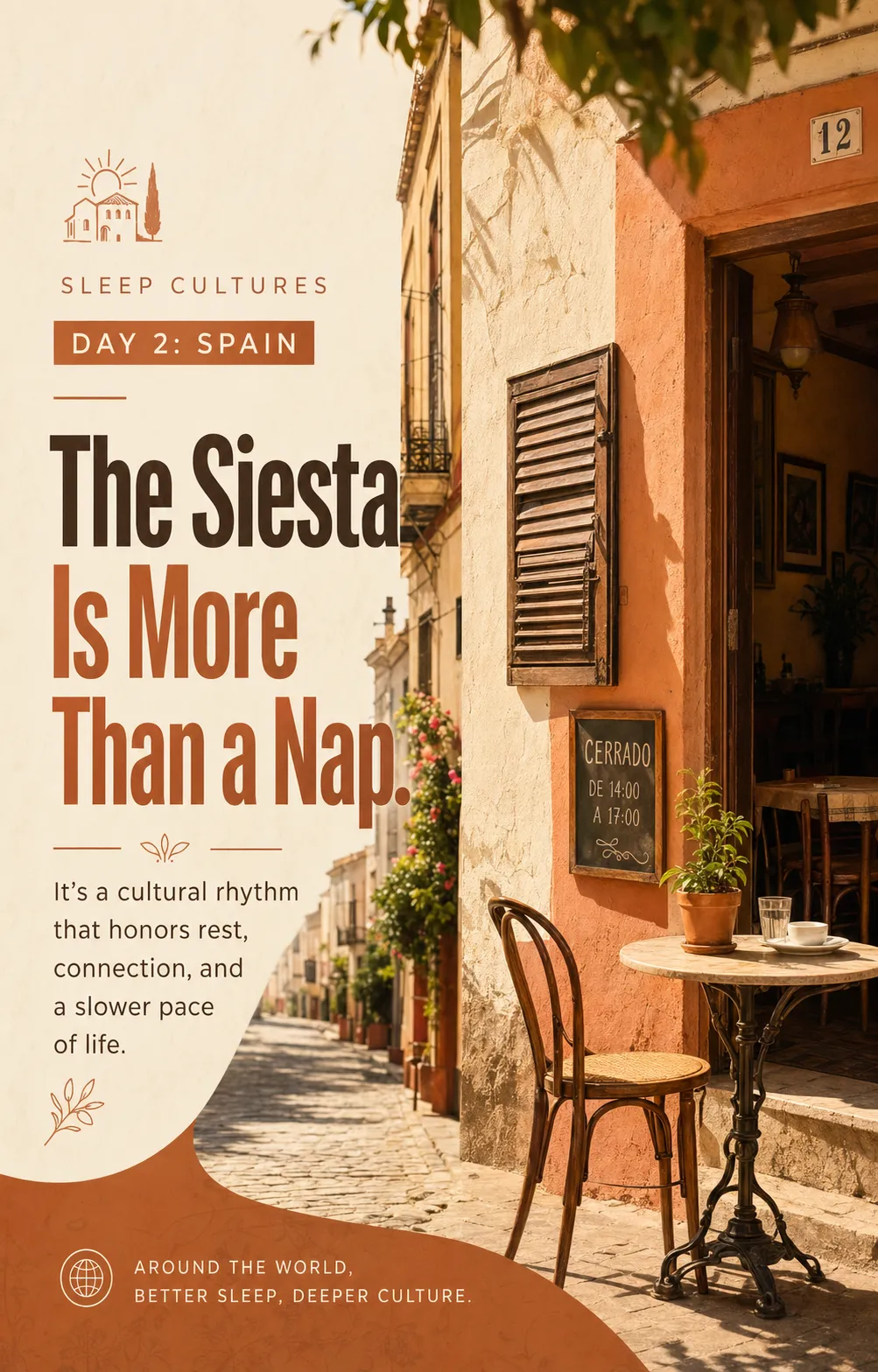
The siesta is not just “being lazy.”
The siesta is one of the world’s most famous sleep traditions — and one of the most misunderstood.
When people hear the word “siesta,” they often picture a lazy afternoon nap. But that picture misses the deeper story. In Spain, the siesta grew out of practical needs shaped by heat, work, and the rhythm of daily life.
Historically, the middle of the day could be brutally hot, especially in regions where people worked outdoors. A pause during the warmest hours made sense. It gave workers time to rest, eat, and avoid the most intense part of the day.
That’s why the siesta is more than a nap. It’s a cultural adjustment to environment. It reflects a way of organizing the day around energy, climate, and social life rather than forcing everyone into a nonstop schedule.
Of course, modern Spain is different now. Not everyone sleeps after lunch, and many people live on schedules that don’t allow for a mid-day break. But even if the habit has changed, the idea still carries weight. The siesta remains a symbol of balance, rest, and a slower approach to time.
What makes this especially interesting is how stereotypes outlive the original practice. Outside Spain, the siesta is often reduced to a joke about laziness. In reality, it tells us something much more useful: sleep patterns are shaped by culture, climate, and human needs.
So the next time someone says “siesta,” think less about laziness and more about adaptation.